
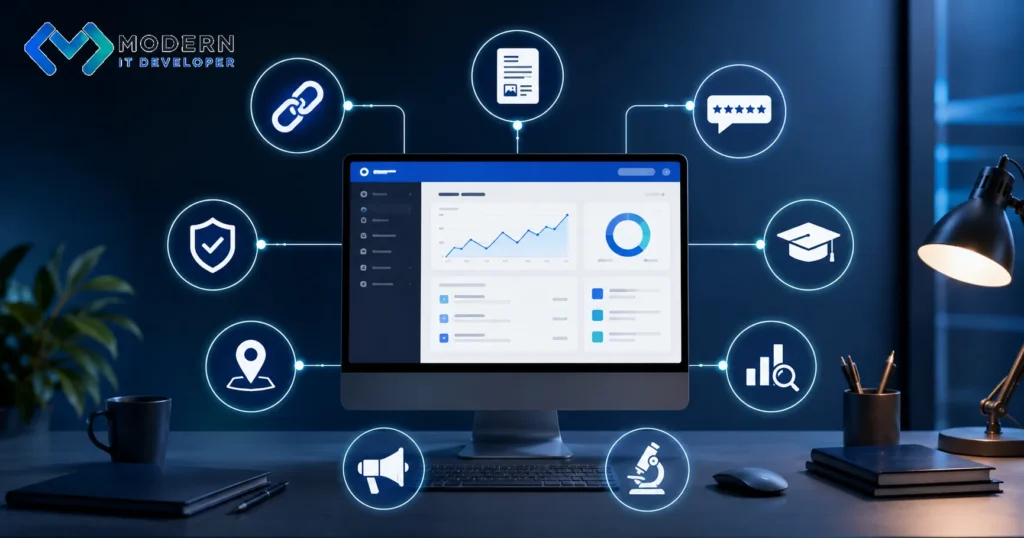
Getting Google to notice your website isn’t about one SEO trick. Strong visibility comes from clear business info, useful content, authority, references, and matching search intent.
Google’s guidance emphasizes helpful, reliable, people-first content and clear site structure. Improving multiple aspects of a website is better than focusing on a single ranking factor. Review ten areas with Dune Seed to make your site easier to understand, trust, and find.
1. Build an About Page That Actually Says Something
An About page should explain who you are, what you do, who’s behind it, where you operate, and why you’re experienced. If experts contribute, clarify their roles and expertise.
- Company background
- Key team members
- Experience
- Location
- Contact info
- Qualifications or memberships
- Links to service pages
The goal isn’t to impress Google with a clear responsibility and give visitors a reason to trust.
2. Earn Quality Backlinks
Links help search engines discover pages and understand website relationships. Quality matters: a genuine link from a respected source, like an industry publication, partner, university, or relevant business, is more valuable than many links from weak sites for SEO.
3. Build Topical Authority with Depth and Consistency
Topical authority is not a single Search Console score but the result of thoroughly covering an area so users and search engines understand your website’s specialization.
4. Strengthen Your Trust Signals
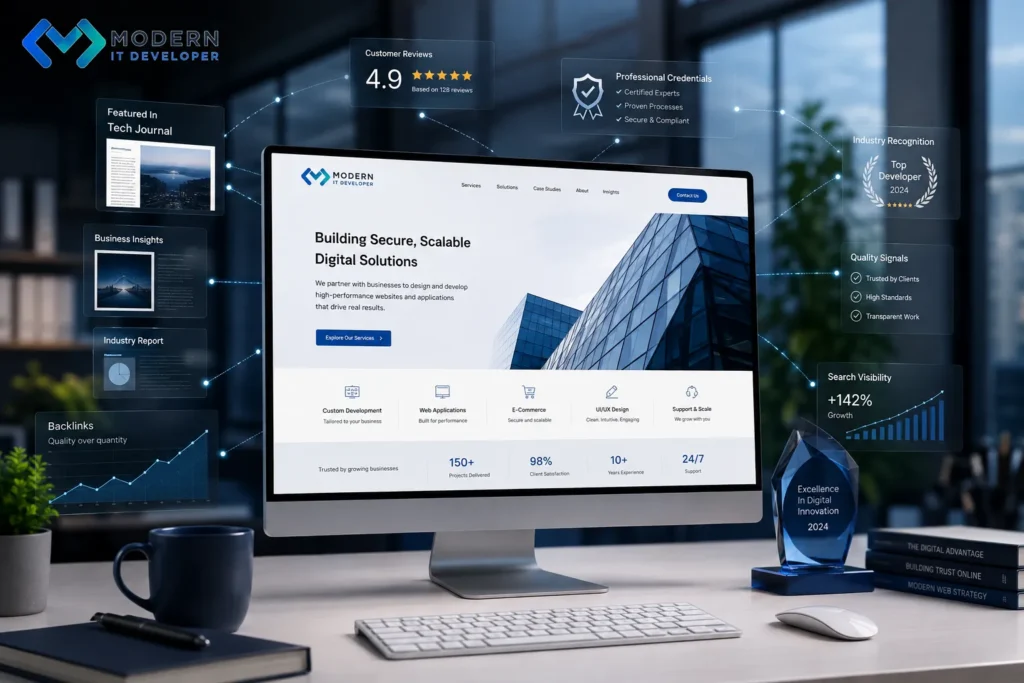
Trust isn’t built just by showing a ‘Trusted Company’ badge. Your website must provide visitors with enough information to verify its legitimacy, such as clear contact details, business information, privacy and terms pages, transparent service descriptions, author profiles, credentials, and consistent branding. All help build trust.
5. Encourage Genuine Customer Reviews
Reviews are vital for local search. Encourage genuine customer feedback, respond professionally, and simplify the review process.
Reviews help potential customers understand what working with your company is like.
6. Highlight Meaningful Industry Recognition
Awards, certifications, memberships, media recognition, and achievements boost credibility when genuine and relevant. While awards shouldn’t be seen as a magic ranking factor, real recognition can lead to mentions, backlinks, branded searches, and increased authority.
If your business has recognition, explain what it is, who issued it, and why it matters instead of showing unexplained badges.
7. Use Digital PR to Become Part of the Conversation
Digital PR combines traditional PR with online visibility. Instead of generic link requests, provide journalists, publishers, and websites with valuable content such as research, data, insights, reports, surveys, or case studies.
Good digital PR earns editorial mentions and natural links, introducing your brand to audiences beyond search. It’s more sustainable than manufacturing backlinks to boost metrics.
8. Publish Original Insights
Repeating information across websites discourages search engines and readers. Businesses can share project results, before-and-after comparisons, internal data, customer patterns, and experiments.
The goal is to add something a reader could not get by opening five other articles on the same subject.
9. Create Useful Location Pages
Location pages help show where your services are available, but simply changing the city name on identical pages isn’t useful.
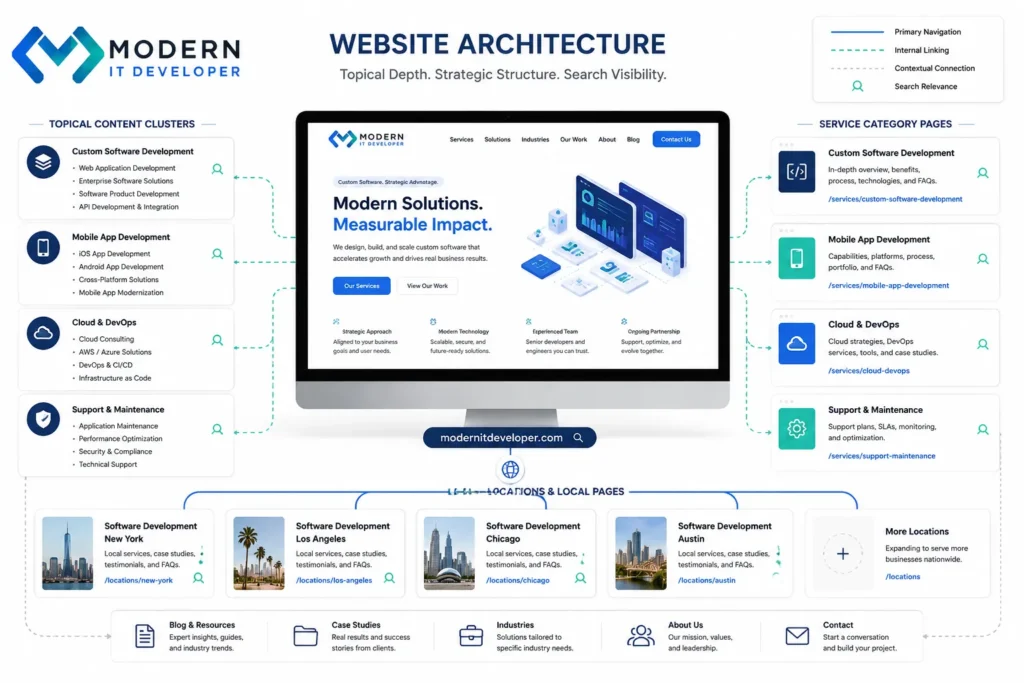
A strong location page should include relevant local info like services, contact details, completed projects, coverage, testimonials, and local questions. Create these pages because customers need them, not just for keywords.
10. Add Useful Content to Category Pages
Category pages are often just grids of products or links, but a brief section can clarify what the category offers.
In ecommerce, useful content explains product types, sizes, materials, compatibility, or selection criteria. Useful content is key; generic SEO copy doesn’t improve a category page.
These Signals Work Better Together
None of these ten elements are isolated tricks. A business with strong backlinks but weak content has issues.
The stronger approach connects technical SEO, content, credibility, authority, and user experience. At Dune Seed, we see individual optimizations as useful only when supporting a cohesive search strategy.
Frequently Asked Questions
How can I make Google notice my website?
Start by making sure Google can crawl and index the site, then improve content quality, internal linking, business information, external authority, and relevance to the searches you want to appear for. Rankings are never guaranteed, but these fundamentals make the site easier for both users and search engines to understand.
Are backlinks still important for SEO?
Yes. Links still help search engines discover pages and understand relationships and relevance. The focus should be on genuine, relevant links rather than collecting large numbers of low-quality or manipulative backlinks.
Do customer reviews help SEO?
They can be especially useful for local visibility and trust. Genuine reviews also influence prospective customers, so their value is not limited to search rankings.
Does every business need location pages?
No. Location pages are most useful when a company genuinely operates in or serves different geographic areas and can provide meaningful information for customers in each location.
Can these practices help with AI search visibility?
Yes, indirectly. Clear structure, useful first-hand content, strong entity information, and credible references make information easier for both traditional search engines and AI-assisted discovery systems to interpret. There is no separate shortcut that replaces sound SEO fundamentals.