
How to Improve Website Conversion Rate with Speed, Clear Offers, and Better CTAs
A website may have steady traffic but fail to generate leads, sales, or inquiries because the issue is often not the visitors but what happens after they arrive.
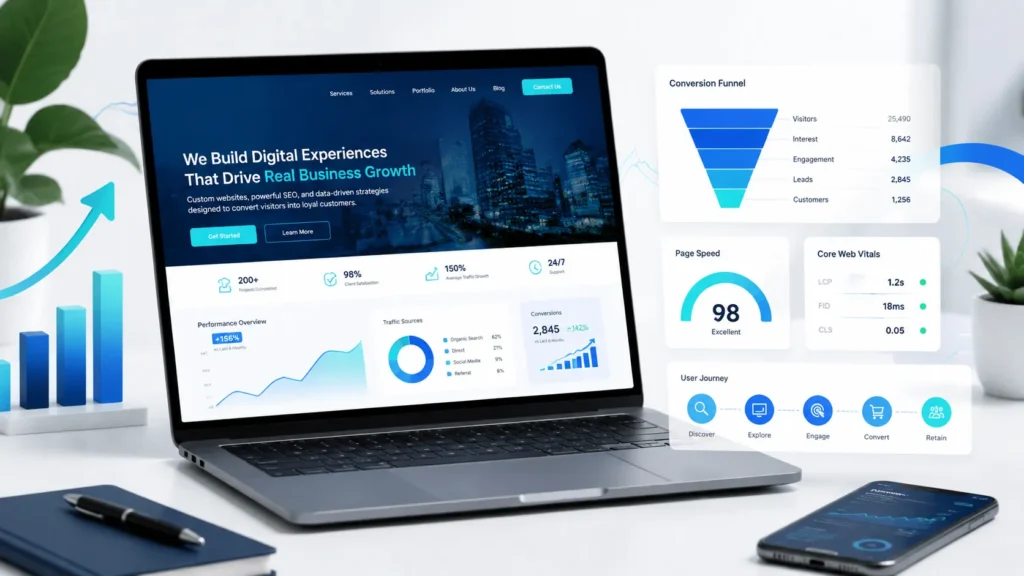
Improving website conversions requires focusing on three core areas: website speed, a clear above-the-fold value proposition, and a straightforward conversion path. These enable visitors to quickly understand the offer and decide confidently.
What Is Website Conversion Rate?
Website conversion rate is the percentage of visitors who complete a desired action, such as buying, submitting a form, booking, signing up, or downloading.
A simple formula is:
Conversion Rate = (Number of Conversions ÷ Total Website Visitors) × 100
A website with thousands of visitors may still perform poorly if users cannot easily understand the business value or complete the desired action.
Conversion optimization focuses on removing barriers between visitors and business goals.
Why Website Conversion Rate Matters for Businesses
A website optimized for conversions helps businesses:
- Generate more leads from existing visitors
- Reduce wasted marketing spend
- Improve user experience
- Build trust faster
- Create clearer customer journeys
A small improvement in conversion performance can have a significant impact because businesses are improving results from visitors they already attract.
The Three Main Factors That Influence Website Conversions
Many conversion problems come from simple user experience issues. Visitors usually decide within seconds whether a website feels useful and trustworthy.
Key Website Conversion Factors
| Conversion Factor | Common Problem | Recommended Solution |
|---|---|---|
| Website Speed | Visitors leave before the page loads. | Optimize images, reduce unnecessary scripts, and improve hosting performance. |
| Main Offer Visibility | Users do not understand the business quickly. | Place the value proposition and primary offer above the fold. |
| Call-to-Action Clarity | Visitors do not know what to do next. | Use one clear CTA that guides users toward the next step. |
1. Improve Website Speed Before Optimizing Anything Else
Website speed is one of the first impressions users experience. A slow website creates frustration and increases the chance that visitors leave before seeing the content.
Users expect websites to load quickly, especially on mobile devices. Even a few seconds of delay can hurt engagement and conversion opportunities.
Common causes of slow websites include:
- Large uncompressed images
- Too many third-party scripts
- Poor hosting performance
- Excessive animations
- Unoptimized code
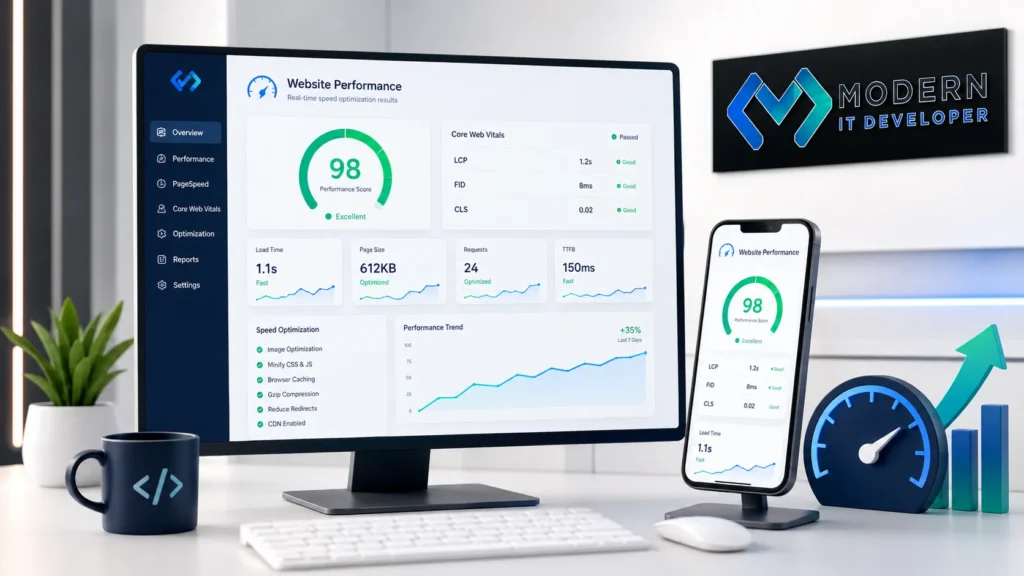
Businesses should regularly check technical performance using tools such as Google PageSpeed Insights and focus on metrics like Core Web Vitals.
Improving speed not only helps conversions. It can also support better SEO performance because page experience is an important part of modern search optimization.
2. Place Your Main Offer Above the Fold
The first visible section of a website is often called the “above-the-fold” area. It is the part users see before scrolling.
This section should immediately answer three questions:
- What does this business provide?
- Why should visitors choose it?
- What action should they take next?
A weak homepage often forces visitors to search for basic information. They may need to scroll through multiple sections before understanding the offer.
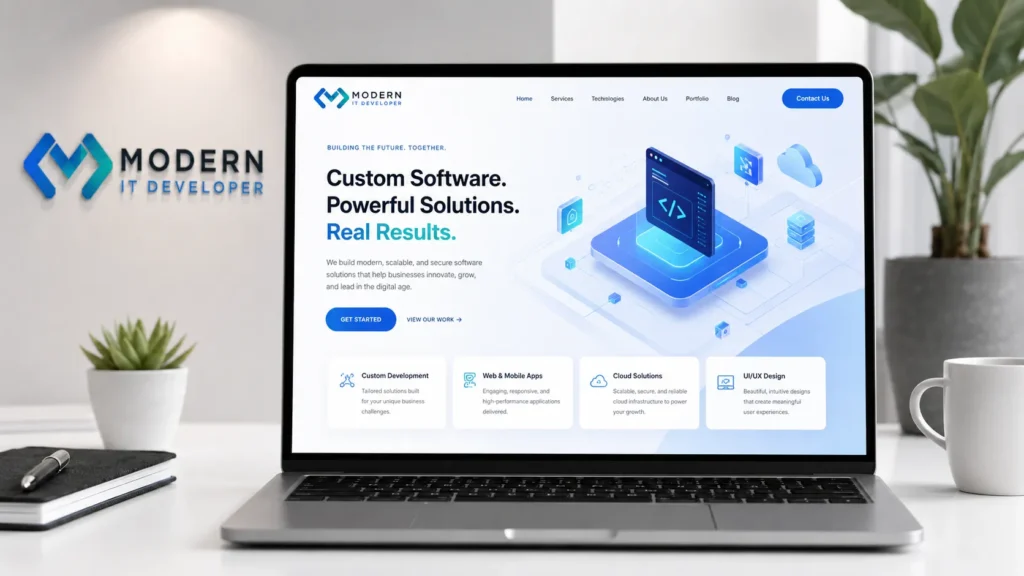
A strong above-the-fold section usually includes:
- A clear headline
- A short value proposition
- Supporting information or trust signals
- One primary CTA
For example:
Instead of:
“Welcome to our website. We provide digital solutions.”
A stronger message would be:
“Build a faster website that attracts more customers and increases online visibility.”
3. Use One Clear Call-to-Action
Many websites lose conversions because they present too many options.
When every button has equal importance, visitors may become uncertain about what action matters most.
A conversion-focused page should guide users toward one primary action, such as:
- Request a consultation
- Start a free trial
- Book a service
- Contact the team
Secondary actions can exist, but they should not compete with the main conversion goal.
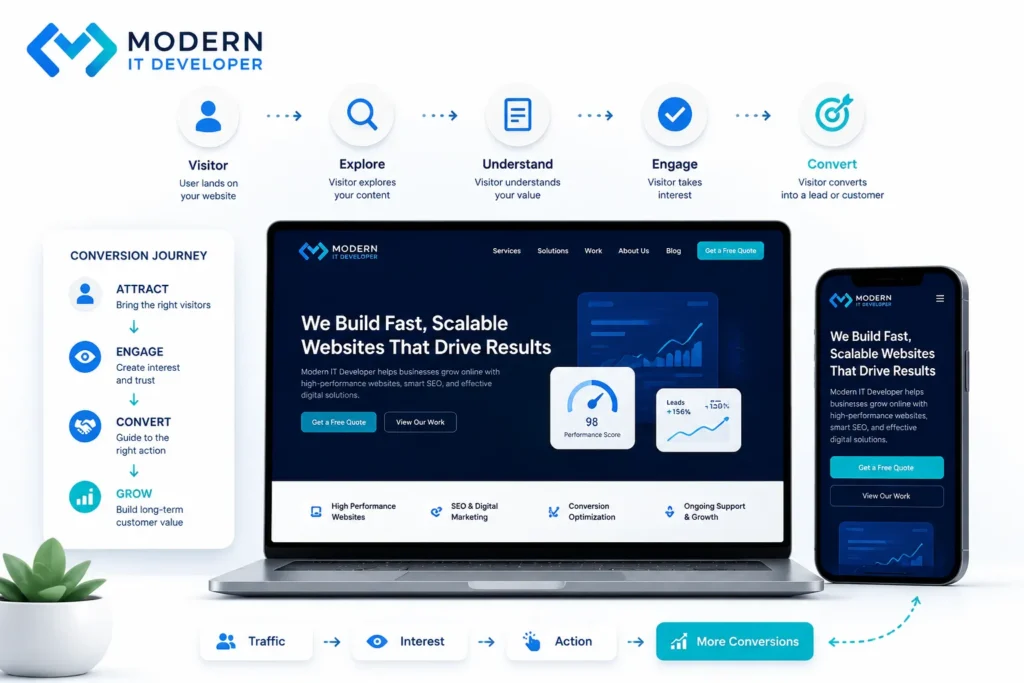
A clear CTA should:
- Use direct language
- Explain the benefit
- Be easy to find
- Match the user’s stage in the buying journey
Avoid Making Visitors Work to Understand Your Business
A common mistake is designing websites from the company’s perspective instead of the customer’s perspective.
Businesses often focus on:
- Their history
- Internal processes
- Technical details
However, visitors usually want answers to practical questions:
- Can this solve my problem?
- Is this company trustworthy?
- What should I do next?
A conversion-focused website makes important information easy to find.
How SEO and Conversion Optimization Work Together
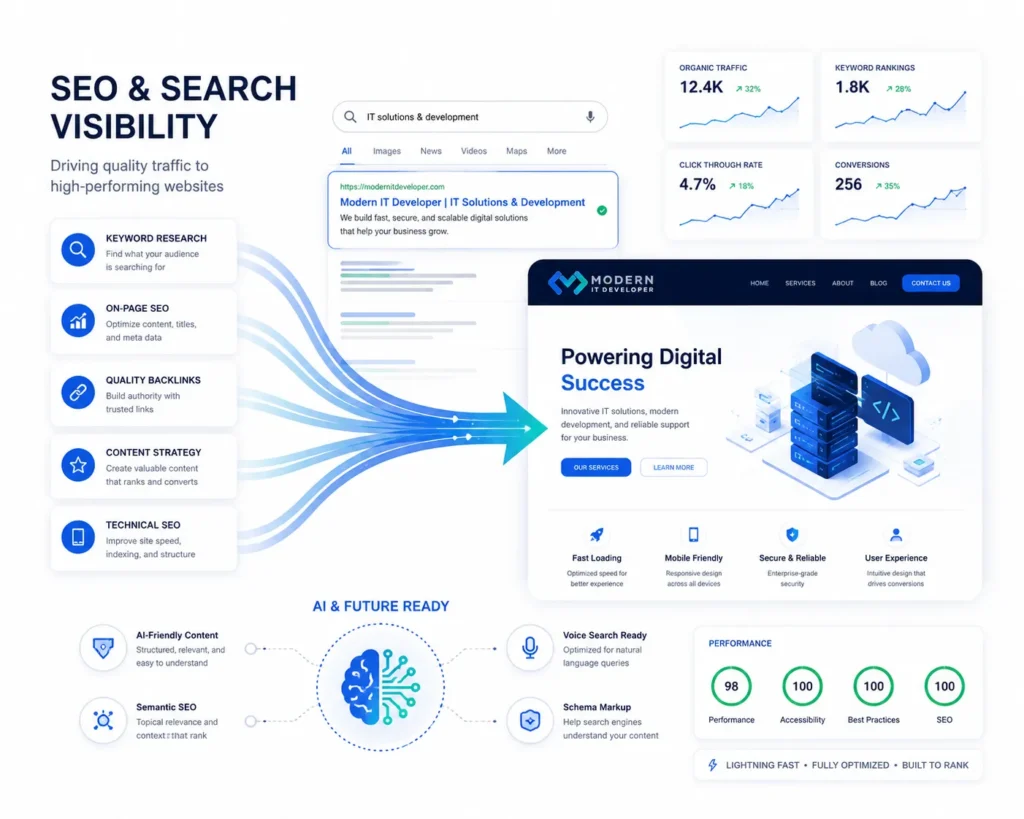
SEO brings visitors to a website, but conversion optimization determines what happens afterward.
A successful digital strategy combines:
- Search visibility
- Helpful content
- Technical performance
- Clear messaging
- Strong user experience
Dune Seed approaches digital growth by connecting SEO strategy, website performance, and user-focused optimization instead of treating them as separate activities.
Practical Steps to Improve Conversion Rate
Businesses can start improving conversions with a structured process:
Step 1: Analyze User Behavior
Review:
- Which pages receive the most traffic
- Where users leave the website
- Which actions receive the most engagement
Analytics data helps identify real problems instead of making assumptions.
Step 2: Improve First Impression
Review the homepage and important landing pages.
Ask:
- Is the main offer clear within seconds?
- Is the CTA visible?
- Does the page explain the benefit?
Step 3: Remove Unnecessary Friction
Simplify:
- Forms
- Navigation
- Checkout processes
- Contact methods
Every extra step creates another opportunity for users to leave.
Step 4: Test Improvements
Conversion optimization is an ongoing process.
Businesses can test:
- Different headlines
- CTA wording
- Page layouts
- Images
- Form length
Small changes should be measured based on actual user behavior.

Common Website Conversion Mistakes
| Mistake | Why It Hurts Conversion | Better Approach |
|---|---|---|
| Too much information above the fold | Users cannot identify the main message. | Prioritize the strongest value proposition. |
| Multiple competing CTAs | Creates decision confusion. | Highlight one primary call-to-action. |
| Slow loading pages | Causes visitors to leave before engaging with the website. | Improve website speed and technical performance. |
| Generic messaging | Does not clearly connect with visitor needs or search intent. | Focus messaging on customer problems, benefits, and outcomes. |
The Future of Conversion Optimization
As search engines and AI assistants become better at understanding websites, businesses need clearer digital experiences.
Websites that communicate their purpose effectively will have advantages because both users and AI systems can better understand:
- What the business offers
- Who it serves
- What actions are available
Conclusion
Improving website conversion can often be achieved by fixing fundamental issues like speeding up sites, clarifying offers, and guiding visitors with simple calls-to-action, rather than a complete redesign.
A website should not only attract visitors. It should help them understand, trust, and interact with a business.
Frequently Asked Questions About Website Conversion Rate
What is a good website conversion rate?
A good website conversion rate depends on the industry, traffic source, and business goals. Many websites consider rates between 2% and 5% as a general benchmark, but the most important comparison is against previous performance and specific business objectives.
How does website speed affect conversions?
Website speed affects how quickly users can access information and interact with a page. Slow websites can increase frustration, reduce engagement, and cause visitors to leave before completing important actions.
Why is a clear call-to-action important?
A clear call-to-action removes uncertainty by showing visitors the next step. When users understand exactly what action to take and why it benefits them, they are more likely to engage with the business.
Should every website have multiple CTAs?
Websites can include multiple actions, but each page should usually have one main conversion goal. Too many competing CTAs can distract visitors and make decision-making harder.
Can SEO improve website conversion rates?
SEO can increase relevant traffic, but conversion improvements depend on the quality of the landing experience. Combining SEO with clear messaging, strong UX, and optimized pages creates better opportunities for business growth.