

A successful landing page is a structured experience guiding visitors to a goal, with each section serving a purpose like generating leads, sales, or sign-ups. Companies like Dune Seed boost performance through SEO, marketing, and website optimization.
Understanding landing page anatomy helps marketers identify weaknesses, enhance user experience, and convert visitors into customers. A good landing page combines persuasive messaging, useful info, trust signals, and strategic calls to action.

Why Landing Page Structure Matters
Visitors usually decide within seconds whether a page is worth exploring. If the headline is unclear, the design is confusing, or the next step is difficult to understand, users may leave before engaging with your offer.
The ideal landing page structure is a focused sequence that takes visitors from promise to proof to action.
1. Strong Headline and Value Proposition
The headline is often the first thing visitors notice. A powerful landing page headline should immediately explain what the business offers and why it matters.
Instead of using generic statements, effective headlines focus on customer outcomes. For example, “Increase Online Sales With Conversion-Focused Website Design” communicates a clear benefit.

Headline Patterns That Work
Issue → Result
The headline highlights a pain point and offers a solution, such as “Tired of X? Get Y in 7 days.”
Benefit → Proof
The headline emphasizes a benefit along with a quick proof point, such as “Increase email signups by 50%. Here’s how.”
Product → Use case
Introducing [Product], your personal budgeting helper.
2. Hero Image or Video
The hero section is the first visual area users see when they land on a page. A relevant image or video can quickly communicate the product, service, or experience.
High-quality visuals should support the message instead of distracting from it. For example, a software company may show its dashboard interface, while a service provider may use a professional image demonstrating the service in action.
3. Clear Call-to-Action (CTA)
A landing page needs a clear next step. That is where the call to action becomes essential.
A CTA should be visible, specific, and focused on user intent. Buttons such as “Get Your Free Demo,” “Start Your Trial,” or “Download the Guide” usually perform better than vague options like “Submit.”
The best landing pages typically include the main CTA multiple times throughout the page while maintaining a consistent message.

4. Benefits and Value Sections
Visitors do not only want to know what a product does. They want to understand how it improves their situation.
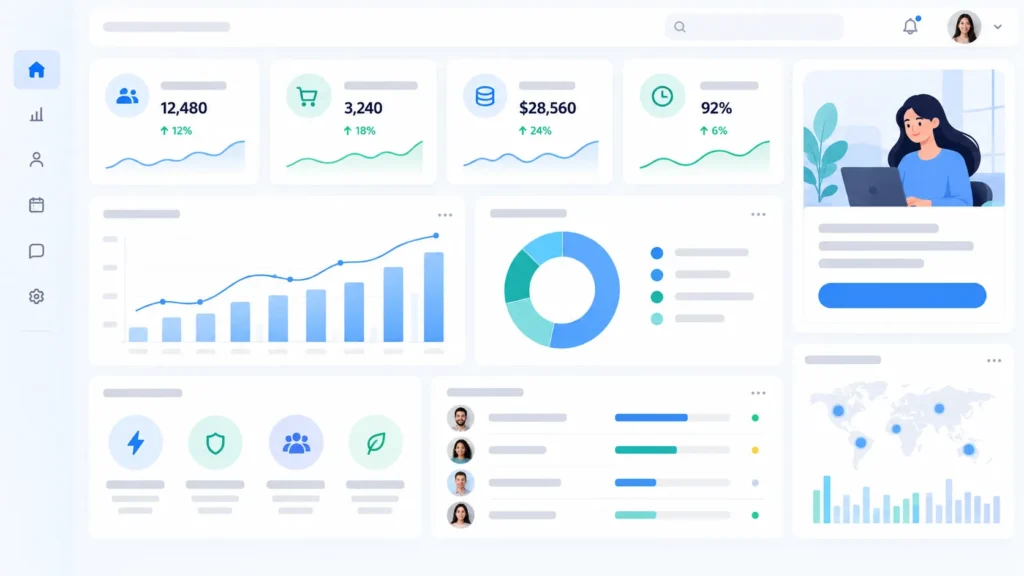
A strong benefits section explains outcomes rather than only listing features. For example, instead of saying “Automated Analytics Dashboard,” explain that users can “Track performance insights without manually collecting data.”
5. Product or Service Explanation
After introducing the main value, landing pages should provide more details about the solution.
This section can include:
- Product features
- Service process
- Key advantages
- Examples of usage
- Deliverables
6. Lead Capture Form
Many landing pages use forms to collect visitor information. However, forms should balance business needs with user convenience.
A simple lead form usually works best when requesting only essential information such as:
- Name
- Email address
- Phone number
7. Social Proof and Trust Signals
Not all social proof is equally effective. Choosing the right format or combo boosts credibility. Prioritise authentic, specific, relevant proof to reassure visitors, ‘people like me have had a good experience with this.’
Trust plays a major role in conversion decisions. Visitors are more likely to take action when they see evidence that others had positive experiences.

8. Scannable Content Structure
Most users do not read every word on a webpage. They scan sections to quickly find what they need.
A landing page optimized for conversions should incorporate: short paragraphs, clear headings, bullet points, visual separation, and highlighted benefits. A forward structure improves readability and helps visitors grasp the offer more quickly.
9. Mobile-Friendly Landing Page Design
Since many visitors use mobile devices to access websites, landing pages need to ensure a seamless mobile experience.
Key factors for mobile optimization include:
• Quick load times
• Clear, large text
• Click-friendly buttons
• Adaptive images
• Straightforward navigation

10. Footer and Contact Information
The footer is often overlooked, but it plays an important role in building confidence.
A professional landing page footer can include:
- Contact details
- Company information
- Privacy policy
- Useful links
- Social media profiles
Providing transparent information helps visitors trust the business and encourages further interaction.
Landing Page Elements Comparison Table
| Element | Main Purpose | Conversion Impact |
|---|---|---|
| Headline | Communicate value quickly | High |
| Hero Visual | Explain the offer visually | High |
| CTA | Guide user action | Very High |
| Benefits | Show customer value | High |
| Form | Capture leads | High |
| Testimonials | Build trust | Medium to High |
| Mobile Design | Improve usability | Very High |
| Footer | Increase credibility | Medium |
Conclusion
The anatomy of a high-converting landing page depends on combining strategy, design, and user psychology. Strong headlines, clear CTAs, useful content, trust signals, and mobile optimization work together to create a better visitor experience.
By understanding each landing page element and improving weak sections, businesses can increase engagement, generate more leads, and achieve better marketing results.
Frequently Asked Questions
What is landing page anatomy?
Landing page anatomy refers to the structure and essential sections that make a landing page effective. These sections usually include a headline, hero section, CTA, benefits, trust elements, forms, and supporting information designed to guide visitors toward conversion.
What are the most important elements of a landing page?
The most important landing page elements include a clear headline, strong value proposition, visible CTA, relevant visuals, benefits, social proof, and mobile-friendly design. These components help visitors understand the offer and take action.
How does a landing page improve conversions?
A landing page improves conversions by removing distractions and focusing visitors on one specific goal. Clear messaging, persuasive design, trust signals, and simple actions make it easier for users to complete the desired conversion.
Should a landing page have a navigation menu?
In many cases, landing pages perform better with limited navigation because fewer distractions keep users focused on the main goal. However, some businesses include simple navigation when trust and exploration are important.
How many sections should a landing page have?
There is no fixed number of sections for every landing page. However, most effective pages include a headline area, benefits, explanation, social proof, CTA sections, and contact information.
What makes a landing page mobile-friendly?
A mobile-friendly landing page loads quickly, uses readable text, has easy-to-click buttons, adapts to different screen sizes, and provides a simple user experience without unnecessary elements.
How can I measure landing page performance?
Landing page performance can be measured using metrics such as conversion rate, bounce rate, time on page, form submissions, clicks, and user behavior analysis from analytics tools.