

A strong resume is not only a list of jobs, responsibilities, and skills. It is a document that shows the value you can bring to a company. Many professionals describe what they did in previous roles, but they fail to explain the results they created. Dune Seed helps businesses and professionals improve their online presence and digital strategies, and the same principle applies to personal branding: focus on measurable impact, not only activities.
Employers do not simply want to know your daily tasks. They want to understand how your work improved performance, solved problems, increased revenue, saved time, or helped a team achieve its goals. A results-driven resume makes those contributions clear.

Why Most Resumes Fail to Impress Employers
Many resumes follow the same pattern: they describe responsibilities without showing outcomes. Statements like “managed social media accounts” or “created marketing campaigns” explain actions, but they do not show why those actions mattered.
Hiring managers review many applications, and they need quick evidence that a candidate can create value. A resume that highlights achievements immediately communicates experience, problem-solving ability, and professional impact.
A better approach is to answer one important question: “What changed because of my work?” The answer should appear throughout your resume.
The Difference Between Tasks and Achievements
A task describes what you were responsible for doing. An achievement explains the result you produced by doing that work.
For example, “managed social media accounts” only explains a responsibility. A stronger version would be: “Increased social media engagement by 40% through content strategy improvements and audience analysis.”
The second statement gives employers useful information. It shows the action, the method, and the measurable outcome.
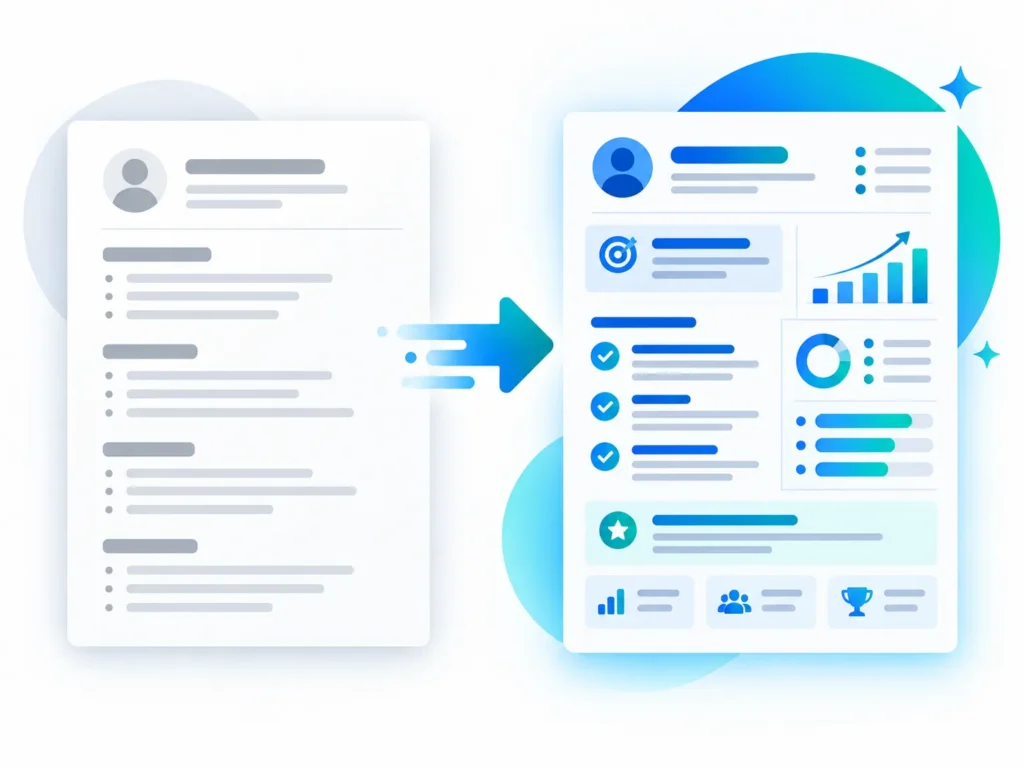
| Task-Based Resume Statement | Achievement-Based Resume Statement |
|---|---|
| Managed website content | Increased organic traffic by 35% through SEO content optimization |
| Created email campaigns | Improved email conversion rate by 20% through testing and segmentation |
| Managed customer inquiries | Reduced response time by 50% by improving support workflows |
Why Companies Care About Impact
Businesses hire people who can help them achieve goals. A resume focused only on duties makes it difficult for employers to understand your contribution.
Results show that you can analyze situations, make decisions, and create improvements. These qualities are valuable across industries, from marketing and technology to sales and management.
Even if your role was not directly connected to revenue, you can still highlight improvements such as efficiency, customer satisfaction, productivity, quality, or team performance.
How to Transform Responsibilities Into Results
Turning a basic resume into a powerful one requires changing the way you describe your experience. Instead of starting with your responsibilities, start with the outcome.
A simple formula can help:
Action + Method + Result
For example:
“Improved website visibility by optimizing technical SEO issues and increasing organic keyword rankings.”
This structure explains what you did, how you approached the problem, and what changed afterward.
Use Numbers to Show Your Value
Numbers make achievements easier to understand. Whenever possible, include percentages, time periods, growth rates, revenue improvements, traffic increases, or efficiency gains.
Compare these examples:
- “Created marketing content.”
- “Published 50+ optimized articles that increased organic traffic by 60% within six months.”
The second example provides context and demonstrates measurable success.
If exact numbers are unavailable, describe the scale of your work. You can mention project size, team collaboration, customer volume, or process improvements.

Focus on Business Outcomes
A professional resume should connect your work to business goals. Companies are interested in outcomes such as:
- More customers
- Higher revenue
- Better user experience
- Faster processes
- Lower costs
- Improved brand visibility
For example, instead of writing “designed landing pages,” explain how those pages supported business growth:
“Designed conversion-focused landing pages that improved lead generation and increased campaign performance.”
This approach shows strategic thinking rather than simple task completion.
Resume Examples: Weak vs Strong Statements
Small wording changes can completely change how employers see your experience.
| Weak Version | Strong Version |
|---|---|
| Managed Google Ads campaigns | Optimized Google Ads campaigns and reduced cost per acquisition by 25% |
| Built WordPress websites | Developed responsive WordPress websites focused on speed, usability, and conversions |
| Helped with content creation | Produced SEO-focused content that improved search visibility and engagement |
The goal is not to exaggerate your experience. The goal is to present real contributions clearly.
Key Sections of a Results-Driven Resume

Professional Summary
The summary section should quickly explain who you are, what you specialize in, and the value you provide.
Avoid generic statements like “hardworking professional seeking new opportunities.” Instead, focus on expertise and results.
Example:
“Digital marketing specialist with experience in SEO, website optimization, and content strategy, helping businesses improve online visibility and increase organic growth.”
Work Experience
Your experience section should focus on achievements rather than job descriptions.
For each position, include examples of projects, improvements, and measurable results. Use action verbs such as:
- Increased
- Improved
- Optimized
- Reduced
- Developed
- Generated
- Implemented
Skills Section
A skills section should support your experience, not replace it. Instead of listing dozens of skills, focus on the ones relevant to the position.
For example, a digital marketing resume may include:
- Technical SEO
- Content Strategy
- Analytics
- Conversion Optimization
- Website Performance
Then demonstrate those skills through achievements in your experience section.
Common Resume Mistakes to Avoid
One common mistake is writing a resume from the company’s perspective instead of the candidate’s value. Employers already know what a position usually requires. They want to know what makes you different.
Another mistake is using vague descriptions without evidence. Words like “helped,” “worked on,” and “responsible for” often hide important achievements.
A strong resume replaces unclear statements with specific examples and measurable outcomes.
How a Strong Resume Supports Career Growth
A results-driven resume is more than a document for job applications. It is a personal branding tool.
When you clearly communicate your achievements, recruiters and potential clients can quickly understand your expertise. This is especially important for freelancers, consultants, marketers, and professionals building their online reputation.
The same principle applies everywhere: people trust demonstrated results more than simple claims.
Conclusion
A successful resume does not only explain what you have done. It proves the value you created.
By replacing task-based descriptions with achievement-focused statements, adding measurable results, and connecting your experience to business outcomes, you can create a resume that attracts more attention from employers.
Whether you are applying for a new position, searching for freelance opportunities, or building your professional brand, showing impact is one of the most effective ways to stand out.
Start reviewing your resume today and ask yourself: “Does this describe my responsibilities, or does it prove my results?”

Frequently Asked Questions
What is a results-driven resume?
A results-driven resume focuses on achievements instead of only listing responsibilities. It explains the impact of your work by showing measurable improvements, completed projects, and value created for an organization.
How do I turn job duties into achievements on my resume?
Convert duties into achievements by adding the outcome of your actions. Explain what you improved, how you improved it, and what measurable result came from your work.
Should every resume bullet point include numbers?
Not every bullet point needs numbers, but measurable results make achievements stronger. Use percentages, growth figures, time savings, project sizes, or other evidence whenever possible.
What words should I avoid on my resume?
Avoid vague phrases such as “responsible for,” “helped with,” and “worked on.” Replace them with stronger action verbs that show contribution and results.
Why are achievements more important than responsibilities?
Responsibilities show what your role required, while achievements show your ability to create value. Employers usually look for evidence that you can solve problems and contribute to business goals.
Can a beginner create an achievement-based resume?
Yes. Beginners can highlight academic projects, internships, personal projects, volunteer work, and measurable improvements instead of relying only on professional experience.