

Search is no longer a simple list of ten blue links. Dune Seed helps businesses adapt to a search environment where Google AI Overviews, AI Mode, ChatGPT search, and traditional organic results can all influence how customers discover a brand. The practical challenge is no longer only “How do we rank?” but also “Can search and AI systems understand, trust, retrieve, and cite our content?”
Google now describes generative AI search as an extension of its existing Search systems rather than a replacement for SEO. Its AI features can use retrieval-augmented generation and query fan-out to find supporting pages across related subtopics, which means a well-structured site can gain visibility across a wider set of questions.
What Is AI SEO?
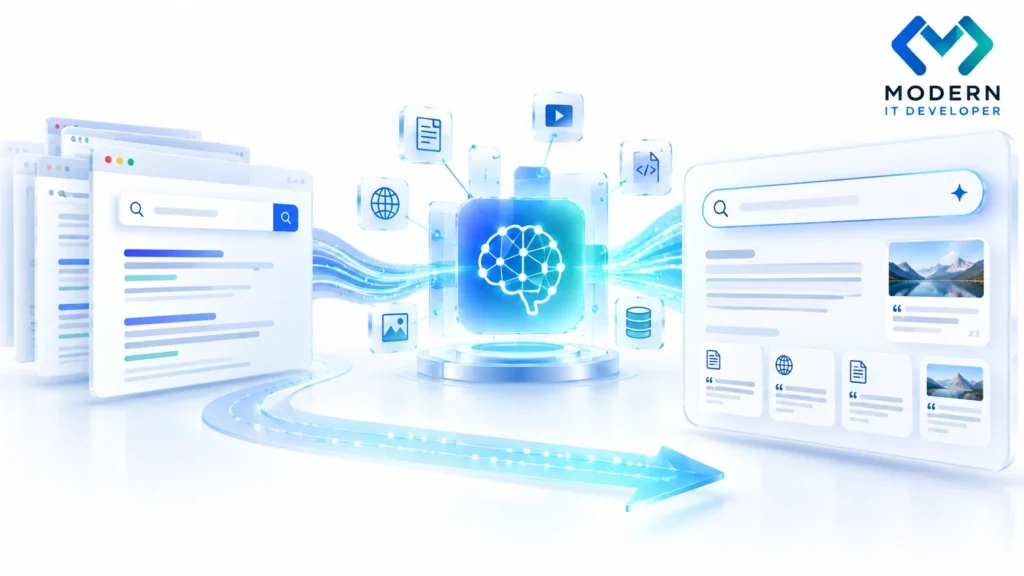
AI SEO is the practice of improving a website so its content can perform in both traditional search results and AI-powered discovery experiences. It combines established SEO work—crawlability, relevance, internal linking, authority, page experience, and content quality—with clearer entity signals, concise answers, strong topical coverage, and content that is easy for retrieval systems to interpret.
The important point is that AI SEO is not a separate shortcut or a collection of secret markup tricks. Google explicitly says there are no additional technical requirements or special AI schema needed for AI Overviews or AI Mode. Pages still need to be indexable, eligible to appear with a snippet, useful to users, and aligned with core SEO best practices.
SEO vs AEO vs GEO: What Is the Difference?
| Term | Main Goal | Typical Focus |
|---|---|---|
| SEO | Improve organic visibility | Rankings, crawling, content, links |
| AEO | Improve answer visibility | Direct answers, FAQs, entities |
| GEO | Improve generative visibility | Citations, authority, brand mentions |
| AI SEO | Combine all approaches | Search engines and AI platforms |
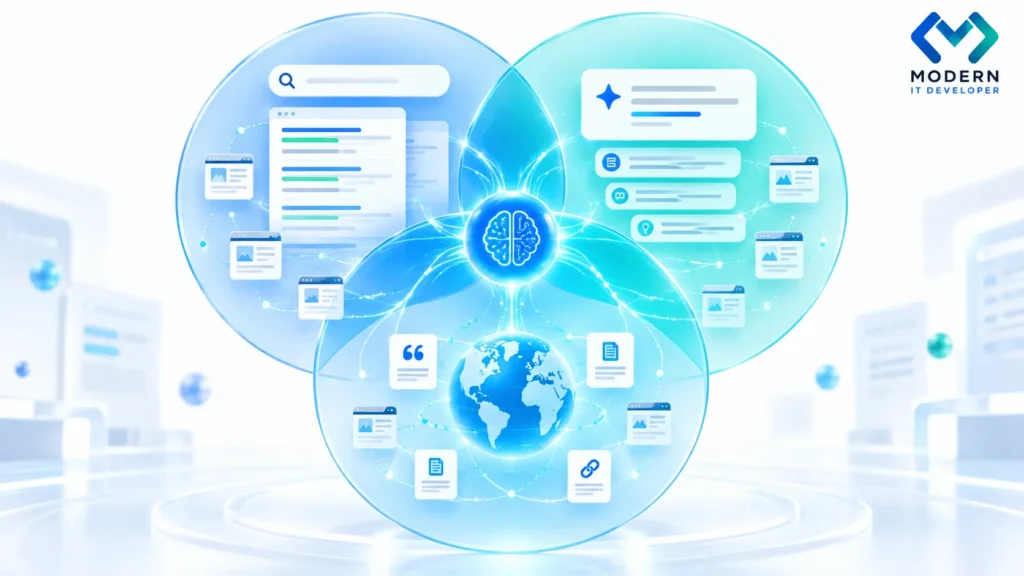
AEO usually focuses on making content easy to extract as an answer, while Generative Engine Optimization focuses on increasing the chance that generative systems will retrieve, reference, or recommend a source. In practice, businesses should avoid treating them as isolated disciplines. Google’s 2026 guidance notes that AEO and GEO are commonly used labels, but optimization for generative Google experiences is still grounded in SEO.
How AI Search Engines Discover and Recommend Brands
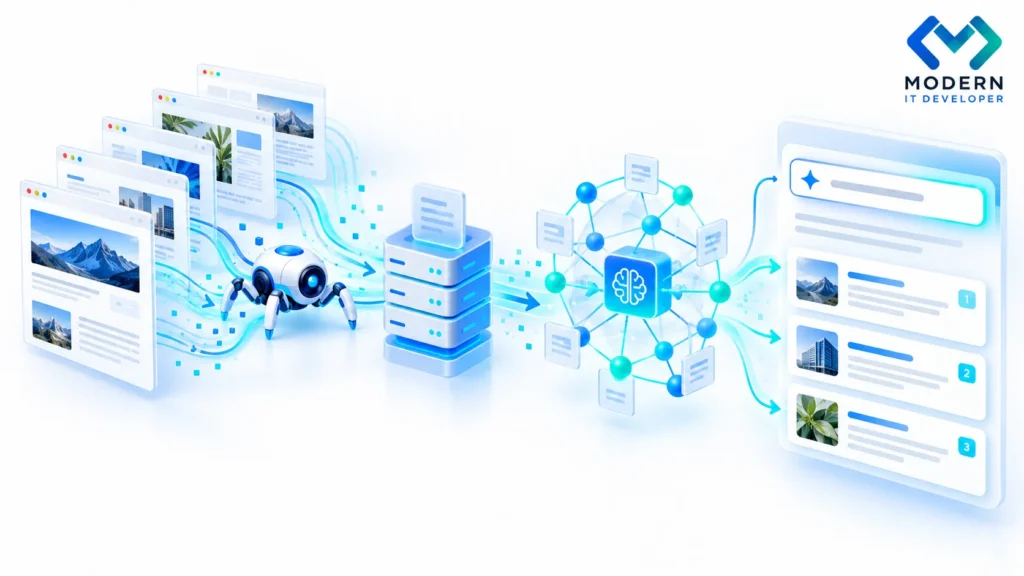
AI search systems need accessible and relevant information before they can surface a website. Search engines first rely on crawling, indexing, and retrieval systems to discover useful pages.
AI systems can then retrieve information from multiple sources to construct responses. Therefore, clear page structure, strong topical relevance, accessible content, and reliable information can increase the chances of a website becoming a useful source.
How to Optimize Your Website for AI Search
AI search optimization starts with answering real customer questions in clear and useful language. Each important page should focus on one specific topic and search intent.
Support your main pages with related articles, service pages, FAQs, comparisons, examples, and internal links. This structure helps users and search systems understand your expertise.
Use descriptive headings and explain complex terms clearly. Keep important information in readable HTML content instead of hiding it only inside images, videos, or scripts.
Improve Content Signals for AI Search
Strong retrieval signals help AI systems understand your content better. Create unique examples, share practical experience, and support important claims with reliable sources.
Keep titles and headings aligned with user intent. Use structured data only when it accurately describes visible page content.
Avoid creating large numbers of similar pages. Quality, relevance, and originality remain important factors for long-term search visibility.

Why Brand Authority Matters More Than Ever
AI visibility is partly a retrieval problem and partly a trust problem. A website is easier to understand when its expertise is consistent across service pages, articles, author information, business profiles, third-party mentions, reviews, and citations. Clear brand entities help search systems connect a company with the topics, services, locations, and people associated with it.
Authority does not come from repeating a brand name or adding more schema. It comes from publishing information worth referencing: original research, useful frameworks, documented case studies, expert commentary, transparent service information, and content that earns legitimate mentions. The stronger the evidence around a brand’s expertise, the easier it becomes for users and retrieval systems to evaluate it.
Technical SEO for AI Search
Technical SEO remains the foundation of AI search visibility. Important pages should load correctly, use proper canonical URLs, appear in XML sitemaps when needed, and stay accessible to search crawlers.
Internal links should guide users and search engines through your website. A clear structure helps crawlers discover important pages and understand relationships between topics.
Technical Elements to Review
Review robots.txt, noindex settings, CDN configuration, JavaScript rendering, structured data accuracy, mobile usability, and Core Web Vitals.
For ChatGPT SEO visibility, check that OAI-SearchBot can access the pages you want to make discoverable. Google AI features also rely on standard crawling and indexing practices. No special AI file is required.
How Dune Seed Approaches Modern SEO
Modern SEO requires a combination of technical health, content strategy, authority, user experience, and AI visibility.
At Dune Seed, the process starts with technical auditing and search-intent analysis. Then, content architecture, on-page improvements, internal linking, entity consistency, and authority building create a stronger search foundation.
Building Long-Term Search Visibility
The goal is not to optimize for only one platform. Businesses need websites that work across Google Search, AI-generated answers, local discovery, and future search experiences.
A strong SEO strategy focuses on valuable content, technical performance, and customer needs. These principles help brands adapt as search technology continues to evolve.

How to Measure AI Search Visibility
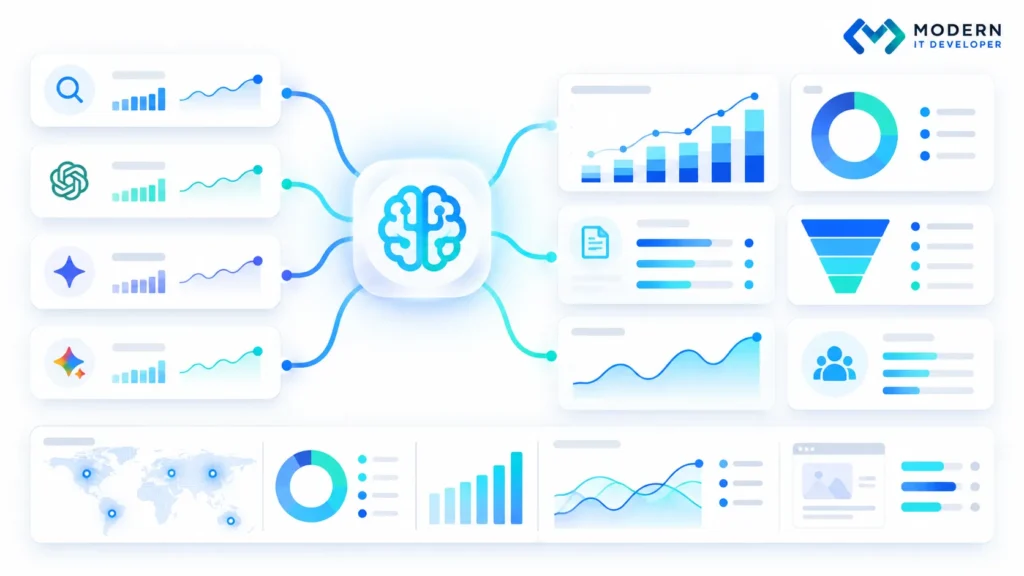
Traditional rankings remain useful, but they are not the only measurement. Track organic impressions, clicks, conversions, branded searches, AI referral traffic, and pages that attract question-based searches.
Monitor whether important pages appear in AI-enhanced results and whether users arrive from AI platforms.
Google Search Console and analytics tools provide useful performance data. Combine multiple signals instead of relying on one AI visibility score.
Start Building Your Search Visibility
AI SEO is not about abandoning traditional SEO. It is about making your website technically accessible, genuinely useful, authoritative, and easy for both search engines and AI retrieval systems to understand. The same work that improves crawlability, content quality, topical depth, and trust can also improve your chances of being discovered in newer search experiences.
Start with the pages that matter most to revenue. Fix technical barriers, answer the questions customers ask before buying, strengthen internal links, publish evidence-backed content, and measure visibility across both search engines and AI platforms. If your current SEO strategy does not account for AI-driven discovery, now is the right time to modernize it.
Frequently Asked Questions About AI SEO
What is AI SEO?
AI SEO is the process of optimizing website content and technical infrastructure for both traditional search engines and AI-powered search experiences. It combines conventional SEO with stronger topical coverage, clear answers, entity signals, authority building, crawler accessibility, and content structures that help retrieval systems understand and reference information accurately.
Is AI SEO different from traditional SEO?
AI SEO builds on traditional SEO rather than replacing it. Technical accessibility, useful content, internal linking, search intent, authority, and page experience remain essential. The difference is that businesses now also consider how content can be retrieved, summarized, cited, or recommended inside AI-generated search experiences such as Google AI Mode and ChatGPT search.
What is the difference between SEO, AEO, and GEO?
SEO focuses broadly on organic search visibility. AEO, or Answer Engine Optimization, emphasizes making information easy to present as direct answers. GEO, or Generative Engine Optimization, focuses on visibility within generative AI responses. The three disciplines increasingly overlap because strong technical SEO, useful content, clear entities, and authority can support visibility across all of them.
Can AI SEO help a website appear in ChatGPT?
AI SEO can improve the conditions that make website content accessible and understandable to AI search systems, but inclusion is never guaranteed. OpenAI recommends allowing OAI-SearchBot to access public content that publishers want discoverable in ChatGPT search. Content quality, relevance, accessibility, and other retrieval factors also influence whether a source appears.
Does Google require special schema for AI Overviews?
No. Google states that websites do not need special AI-specific structured data or machine-readable files to appear in AI Overviews or AI Mode. Existing SEO fundamentals still apply. Structured data can remain valuable when it accurately represents visible page content and supports eligible search features, but adding invented AI markup does not create special eligibility.
How do you measure AI search visibility?
Measure AI search visibility using several signals rather than one score. Monitor Search Console visibility, organic traffic, AI-platform referrals, conversions, branded searches, citations, landing-page performance, and visibility for important questions. Comparing those signals over time provides a more useful picture of whether AI-driven discovery contributes to meaningful business outcomes.
Is ChatGPT SEO the same as GEO?
ChatGPT SEO is an informal term generally used for efforts to improve discoverability in ChatGPT search, while GEO covers visibility across a broader range of generative engines. The tactics overlap significantly: accessible pages, authoritative content, clear entities, original information, strong topical relevance, trustworthy citations, and technically sound websites can support both goals.